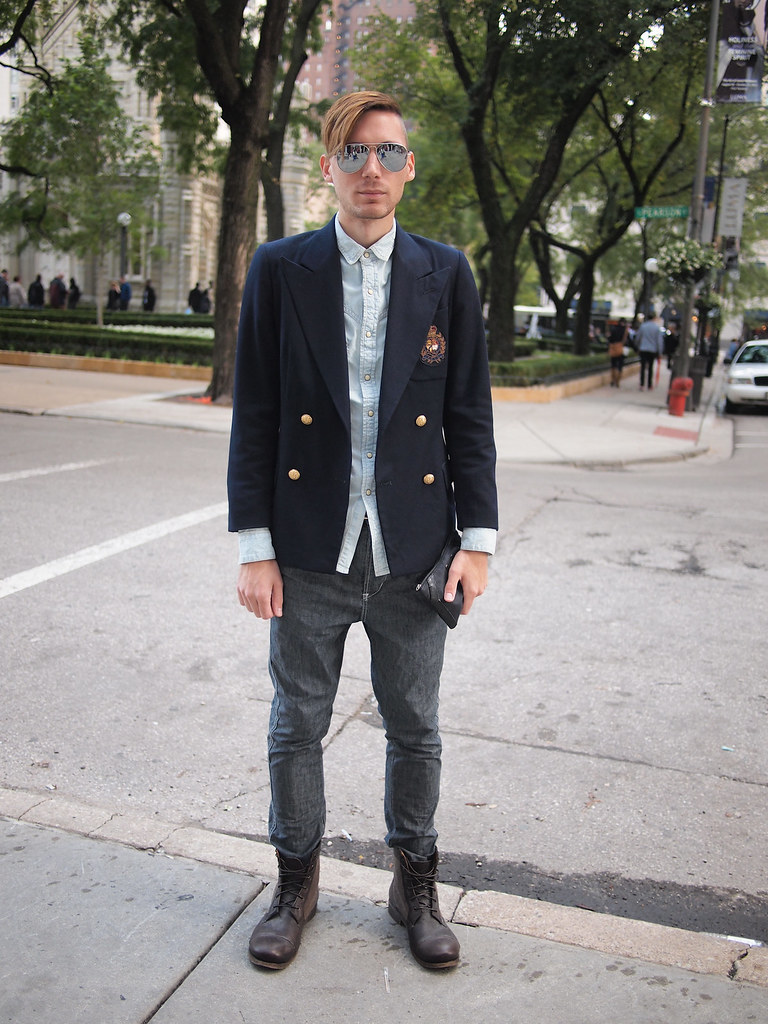

His vintage Ralph Lauren blazer reminded me of the Seinfeld episode where Elaine forces Jerry to buy the Joseph Abboud blazer with the “hand ticking around the crest” so she can date the salesman, who later promises to get her the Nicole Miller dress she has her eye on. Jerry later fails in his attempt to return the jacket “for spite” and Elaine cuts off the salesman’s terrible ponytail after she finds out he lied about the dress. The episode is called the “Wig Master,” you might remember it as the one where Kramer famously (and inadvertently) dresses up like a pimp when Susan’s friend loans him the Technicolor dream coat. It’s a classic, up there with “The Contest” and “The Tape” in my book.
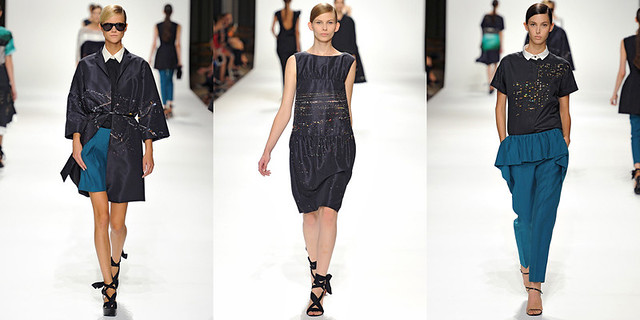
When I watched the Style.com video above of Dries Van Noten’s Spring 2012 runway show I “oooohhed” and “ahhhhed” aloud over the phenomenal city-scape prints. I enrolled in metropolitan planning as an elective during my graduate program, a class I greatly enjoyed. I am obsessed with cities and urban landscapes. I attribute that to my childhood in New York and subsequent adolescence in Fayetteville, Arkansas, which allowed me to daydream about city-scapes for nine years. When something is familiar yet distant, as cities became to me as I grew up, there is a sense of fascination that develops in its absence. Brief trips to Chicago and New York as a teenager only whetted my thirst for the urban lifestyle. It is in that context that my deep and abiding love for the city grew, and nothing was more enchanting to me than the way a city looks at night. To say that the night sky of a metropolis is magical would be the understatement of the century. It is the representation of humanity’s collective ability to dream into existence a luminescent artificial landscape. The physical environment of a city, literally glowing with energy, embodies the collective ability of engineers and architects to marry ideas to reality. What better source of inspiration for a fashion designer seeking to clothe the modern woman?
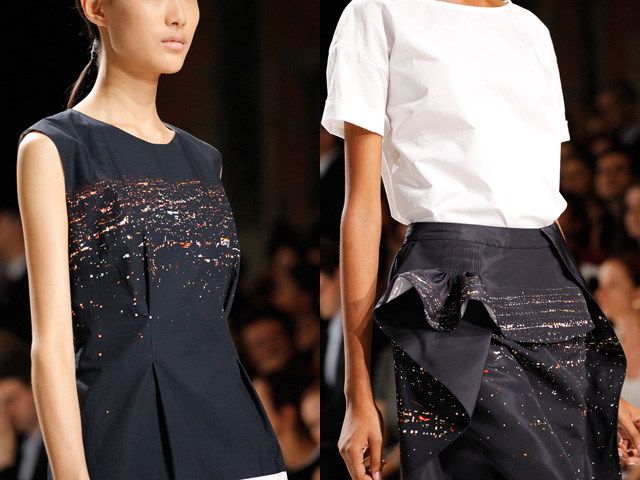
Van Noten used pictures of nightime cityscapes taken by noted photographer James Reeve and applied them to impeccably tailored tops and dresses. Elevating conceptual fashion even further, he used what looked to be Swarovski crystals in a grid-like smattering across a skirt, echoing the imagery of Reeve’s work. For me, this collection was everything I could have dreamed of for a fashionable yet work-appropriate wardrobe. The result was a spectacular opus to the modern urban woman, a collection of highly wearable but magnificent clothing.