Archive for 2012
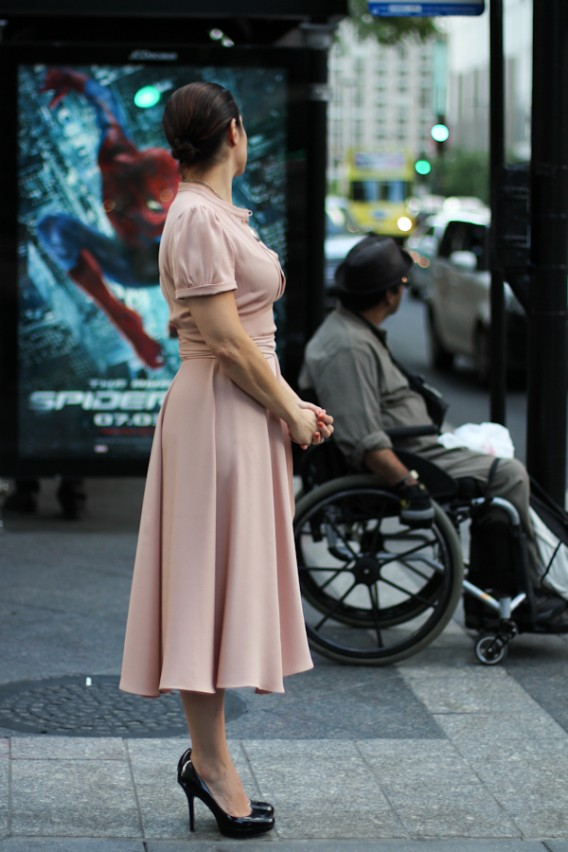
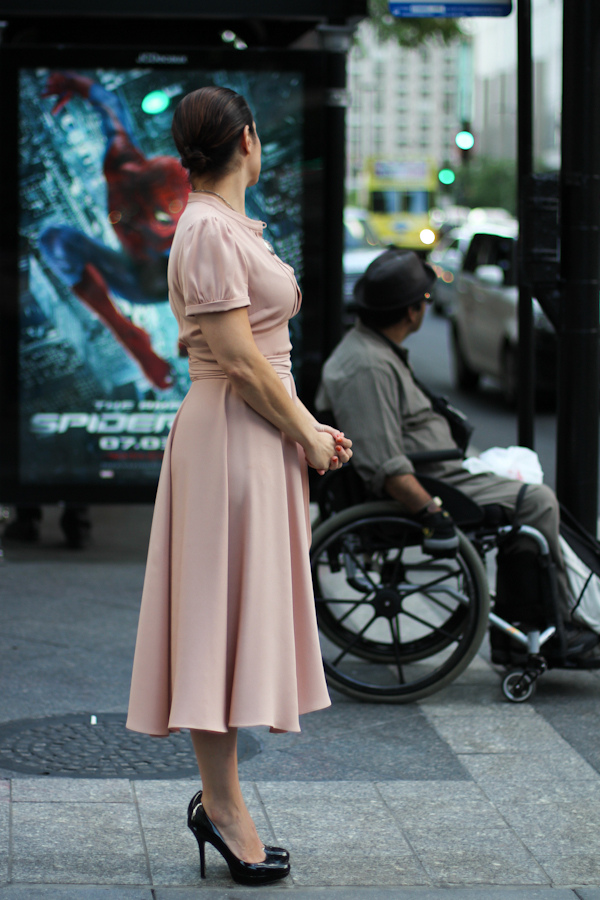
I always feel like the world’s biggest creeper when I take candid photos of people (outside of the Fashion Olympics). Admit it, you know it’s weird. And slightly stalkerish. That’s why I like to approach and pose my subjects. However, sometimes I’m walking down the street and a candid photograph is literally staring me right in the face. Then I kind of shrug my shoulders and say “eh, go for it.”
I went up afterwards to introduce myself, because not doing so is even weirder than taking the photo in the first place! Her name is Katherine and she works across the street at Neiman Marcus. She was running a quick errand when I caught her out front of Tiffany & Co looking positively statuesque in her Marc Jacobs dress. Timing is everything, my friends.




Urban geography fascinates me so much that I took a metropolitan planning class at DePaul and worked as a research assistant at the Chaddick Institute for Metropolitan Development. All those years in elementary school spent playing Sim City 2000 before bed really sunk into my brain. It’s strange to me how quickly neighborhoods change, both in the game Sim City and in real life. Ever since cities have existed, all the way back to Mohenjo-Daro (yes I am a history nerd AND an urban planning nerd so take that, haters) cities have shifted and been abandoned and reinhabited as migration patterns change. In fact, the only constant in urban planning (and all of life) is that the only constant is change. It’s still crazy to me to stand at North & Halsted, in front of the Apple Store & Crate and Barrel, and think that just a few years ago this area was home to one of the most notorious housing complexes in the nation.
The ironic thing about Cabrini-Green is that it was based entirely on renowned Parisian architect/urban planner Le Corbusier’s utopian vision for urban living. His name is right up there with Mies Van Der Rohe in terms of design influence during the mid-century paradigm shift. People back then really believed that it was better to design structures as simple as possible (I’m WAYYYYY oversimplifying this) and to live in anonymous apartment towers. You can blame buildings in Chicago like the IBM (soon to be AMA) Building on this mode of thinking (and Mies, who designed it). Clearly, the field of environmental psychology had not yet germinated. In fact, Le Corbusier wanted to demolish large swaths of historic Paris in favor of giant housing complexes arrayed in rows just like Cabrini. Can you imagine if he had succeeded into turning Paris into this? Weird how a design concept with such optimistic beginnings and honest intentions, of improving the lives of its inhabitants, could have turned out so negatively. The lesson here I suppose is that no matter what the intention or design, everything really comes down to the execution.